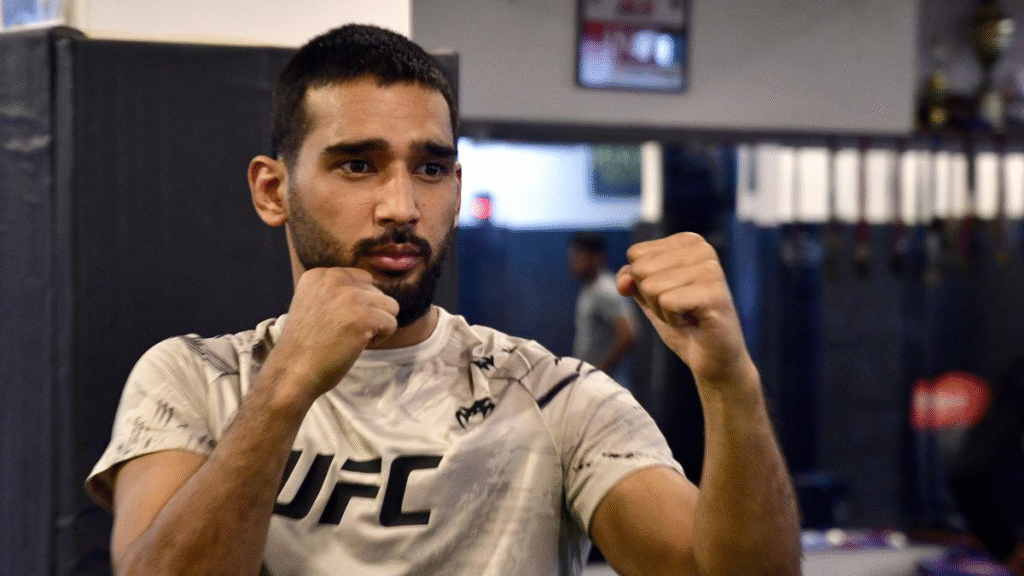
Anshul Jubli, one of the early faces of Indian MMA, comes from a modest background and a journey shaped by sacrifice. In his early twenties, he saved months of earnings from teaching maths in Dehradun to fund his basic MMA training—money that ran out in just 2 months. He survived in Delhi by borrowing from friends, just to get started.
From those early days in Delhi to training in Thailand, becoming an MFN champion, and earning a Road to UFC contract, his journey itself is a landmark for Indian MMA.
The Cinema Indians
There’s a line from Gangs of Wasseypur that stays close to my heart:
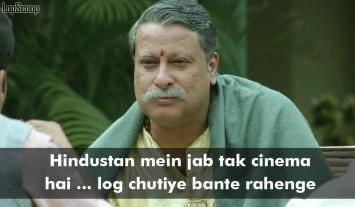
Today, Anshul is on a two-fight losing streak in the UFC. Some are quick to troll him.
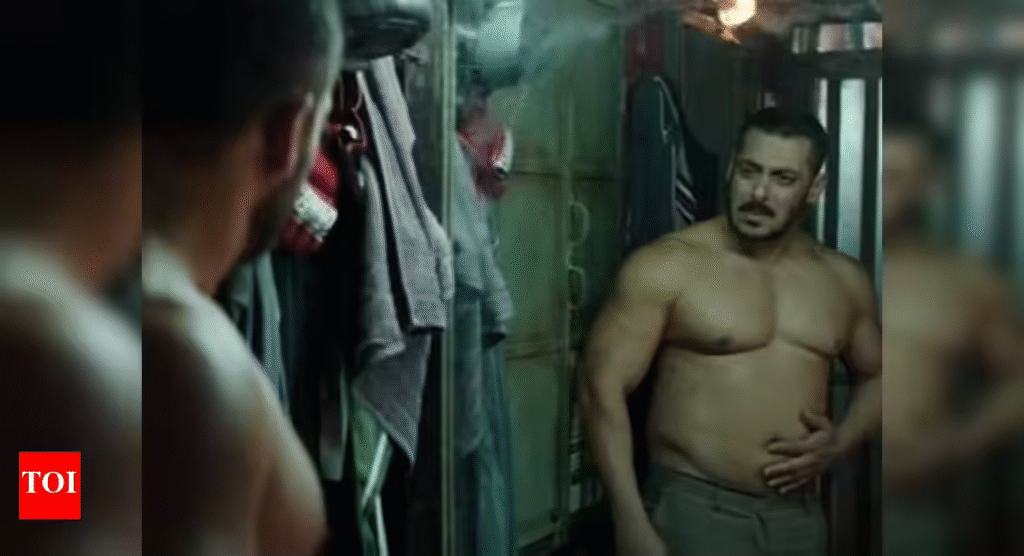
A big reason for this impatience is our cinematic conditioning. Many viewers who haven’t grown up around sport are still waiting for miracles—thanks to Hollywood heroes who flip cars, defy physics, and walk into happy endings. Bollywood adds another layer of sugar. Films like Sultan make us believe that a non MMA background guy, come out of wrestling retirement, train under railway tracks or in garage gyms could go on an uninterrupted winning streak, and eventually lift a championship belt.
Real sport doesn’t work that way.
Reality Check
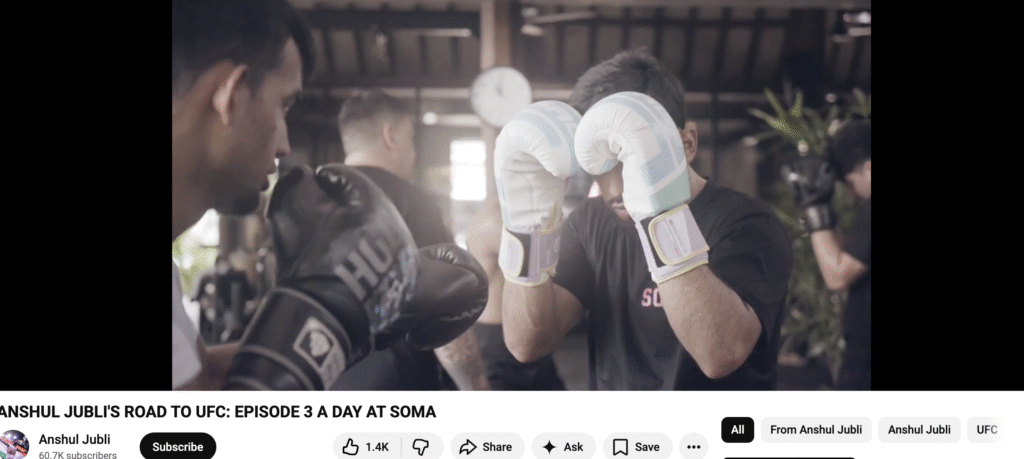
Champions of Indian MMA—fighters like Angad Bisht, Pooja Tomar, and Anshul Jubli—have all had to go abroad for professional training to truly level up and compete neck to neck on the global stage.
And this isn’t a coincidence.
Japan had PRIDE FC as early as 1997.
The USA has had the UFC since 1993.
Brazil, Russia, and other nations grew up with strong home ecosystems in boxing, Brazilian jiu-jitsu, and wrestling long before MMA became mainstream.
India, on the other hand, is still laying its first stones.
Reality Check #2 Purchasing Power of India VS USA
Purchasing Power Parity (PPP) simply means this: the same amount of money gives you very different lives in different countries.
An entry-level worker at McDonald’s in the US can earn around $1,500–$2,000 a month. After rent and food, many still have money left—money that can be used for training, travel, or simply taking risks.
In India, an entry-level McDonald’s employee earns around ₹12,000–₹15,000 a month. Even in a resonable city like Dehradun, this barely covers rent, food, and Sports Diet. There is little room left for savings, let alone chasing a passion like professional sport.
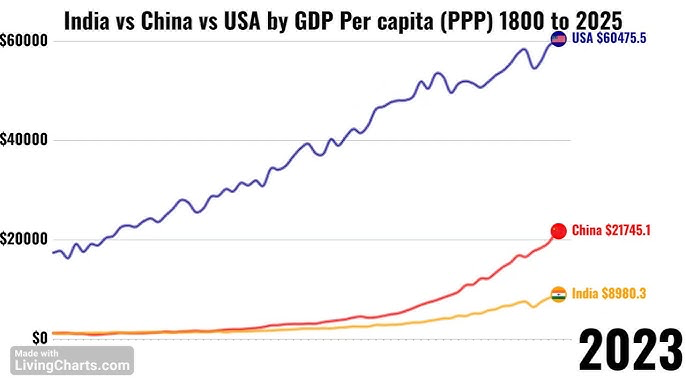
This difference in purchasing power creates a difference in freedom, adding a burden.
Expecting instant dominance from a country that is still building its fighting ecosystem is a very cinematic expectation—but sport doesn’t work like movies. It works like generations.
pioneers like Anshul Jubli are not results—they are foundations.
Leave a Reply